Saturday, 19 December 2015

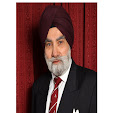
About Gurmukh Singh UK

Updated: 19 December 20015 


© Copyright Gurmukh Singh (U.K.)
Please acknowledge quotations from this article. 
--------------------------------------------------------------------------


For one engaged in community service, there are queries about background and achievements.

Below is a summary from Eastern Media Group archives (updated with photos): 

About Gurmukh Singh:

Gurmukh Singh was born in India (11 September 1938 at Bhuj in Kutch) and received his school education in Malaysia. He arrived in the UK in 1960 and joined the Board of Trade (later Department of Trade and Industry) in December 1962. He achieved four promotions during a changing race relations period, while retaining his full identity as a Sikh.

He held many high profile positions including departmental representation at European forums and the World Trade Organisation (ex-GATT) at First Secretary equivalent position. On promotion to a policy Principal, he served for 9 years and retired in June 1996 from the Aerospace Division of the Department of Trade and Industry.

Following retirement, he has devoted his full time to community service, supporting and advising many nationwide Sikh organisations, local representatives and Members of Parliament. Through his faith advisory services for many groups within the community, he has played a significant catalytic role in keeping UK Sikh affairs on an even keel, while promoting transparency in Sikh-Government interface. He is closely associated with the original open British Sikh Consultative Forum (BSCF) to bring diverse nationwide Sikh organisations around one table on major issues concerning UK Sikhs. As continuation of the open BSCF, he is serving by invitation as Member of the Board of Jathedars, Sikh Council UK. He is Chairperson of the Advisory Board of the Sikh Missionary Society UK

He writes extensively and has produced many publications including Sikh centennial souvenirs and a Sikh Australian publication about Vaisakhi, and numerous articles on topical issues affecting British Sikhs.

He has given frequent talks and media briefings. In recent years, he has interpreted Sikh scriptures in the context of 21st-century issues. The topics include environmental and the Earth Charter topics, Sikh religious view on ageing and care of the elderly, issues concerning advances in science, and many other educational and welfare topics.

He wrote a weekly column in The Sikh Times published by the Eastern Media Group, for a number of years, and now writes a weekly lead column in English "News & Views" in the UK's Panjab Times.

He is a member of the Institute of Chartered Secretaries and Administrators (ACIS), and Member of the Chartered Management Institute (MCMI).

Honours and awards:
Honoured by the Canadian Sikhs with “Sirdar Kapoor Singh Khalsa Millennium Award" in 2001 in recognition of his scholarly interpretation of Sikh ideology.
Honoured by the Gurmat Gian Missionary College, Ludhiana, India, the Sikh Missionary Society UK and by Jathedar of Sri Akal Takht Sahib for his services to the community.
Honoured with a Lifetime Achievement Award at the first Guru Nanak Dev ji's Parkaash (birthday) Gurpurb event at the UK Parliament organised by the All Parties Parliamentary Group for British Sikhs, the Sikh Network and the Sikh Federation (UK).
Appointed an Officer of the Order of the British Empire in the 2016 New Year Honours.
Honoured by the British Community Honours Awards (BCHA) 2016 at the House of Lords for his work to improve the welfare and integration of minority and ethnic communities.

Links:
http://www.sikhmissionarysociety.org/
(see under "Articles on Sikh Ideology & Identity"
http://www.panjabtimes.co.uk/category/editorial/news-and-views/

-----------------------------------------------------
Below is an e-mail to the UK based cyber forum, Sikh News Discussion,  from Sardar Kashmir Singh, General secretary of the British Sikh Federation:

To: sikh_news_discussion@yahoogroups.com; IHRO 
Sent: Mon, 22 Nov 2010 21:03
Subject: [sikh_news_discussion] Brilliant Gurmukh Singh

WaheGuru Ji Ka Khalsa, WaheGuru Ji Ke Fateh

Sometimes people do not realise the tremendous ability of fellow Sikhs, who quietly go about their professional activities and provide sewa to the Sikh Qaum (Nation).

A review of Sardar Gurmukh Singh’s background shows many good features. The following are some summary points:-

1. He completed over 33 years service in the UK Government Department of Trade and Industry, covering 11 jobs through 4 grades to policy Principal.

2. Senior Director level Government Officers say he achieved a consistent high level of performance.

3. Government Dept leaders say that he produced high quality work over a wide range of issues, which also resulted in a good spirit in the teams that he led.

4. He was probably the first ethnic minority civil servant to represent the UK abroad when he led UK offical level discussions at Geneva.

5. He made a large number of presentations to the UK chambers of commerce, trade associations and export clubs.

6. Over his last 9 years of a brilliant career, he successfully managed complex budgets – DTI running costs (budget of over £300 million), capital (over £50 million), and a research and technology demonstration programme (£23 million) to within 1% of provision.

7. Following retirement , he has devoted his time to Sikh community service, supporting and advising many nationwide Sikh organisations, local representatives, and Members of Parliament.

8. He was honoured by Canadian Sikhs with Sirdar Kapoor Singh Khalsa Millenium Award in 2001 in recognition of his scholarly interpretation of Sikh ideology.

9. He was born on 11 September 1938 at Bhuj in Kutch, and received his school education in Malaysia. He arrived in the UK in 1960, and joined UK Government service in 1962.

What an amazing person in our midst.

Kashmir Singh LL.B, LL.M, C.Eng, Project Management NVQ; former member of statutory OFWAT water industry customer services committee for England and Wales, IEE Council
07721-507055
General Secretary, British Sikh Federation, PO Box 242, Wolverhampton, WV4 5DH, England, UK
------------------------------------------------------

Additional information:

Family background is given by youngest brother Dya Singh of Australia in his article:
"A Sikh Diaspora Story" on this blog (May 2013). 
Copy paste below URL:
http://sewauk.blogspot.co.uk/2013/05/a-sikh-diaspora-story.html

The range of hundreds of articles include Guru Nanak's Challenge to terrorism, Sikhism and ageing and Earth Charter and environmental topics. Over the years I have contributed to books by other authors, edited glossy Vaisakhi and Sikh centennial souvenirs, and written a publication covering the most challenging period in the 18th Century as, "Gurdwara Shaheed Ganj Singh Singhania, Lahore.".

Appreciation for long articles has come from scholars like Dr Sangat Singh - some years ago, he sent a most appreciative letter through the Sikh Missionary Society UK about my Autralian booklet, a long essay, "Vaisakhi 1699 The high Point of Sikhism".

 Earlier comparative religious study books by S. Gurbachan Singh Sidhu were comprehensively edited by me at his request, and in "Sikh Religion and Islam" which I co-authored with him, I contributed the Sikh part and rewrote the whole book with the introduction and introductory paragraphs under each chapter to make it easier for the student to understand the essential differences. Editing of his "Challenge to Sikhism" took a similar approach.

I support Sikh charity and heritage organisations. I was invited to become the Patron of "Khalsa Aid", the international Sikh charity,  in August 2013 for about 3 years.

I contributed part of the briefing material for "From Jawans to Generals: Loyal Allies, Proud Britons" exhibition launched by Prince Charles in 2oo2 at Wellington Arch, Hyde Park Corner, London. I have argued strongly for the retention and preservation of Sikh heritage artefacts in the UK.

The valedictory letter from the Department of Trade and Industry (DTI) below, gives some idea of the policy positions held. I was the first Sikh to represent United Kingdom at the World Trade Organisation (then called General Agreement on Tariffs and Trade - GATT).

At Geneva 1985/6
------------------------------------------

Documents & images of interest:

Click on letter and photos below for full image & magnification:

Representing UK at the European Transonic Wind-tunnel Project 


Examples of Departmental acknowledgements of contribution to Government consultations. 


Environment Advisory Group

Sikh heritage items in the UK:


Report in the Indian Express of 18 April 2006 

Some other highlights:


About role in the Sikh Council UK


With Khalsa Aid Chief Executive, Ravi Singh after Somerset Floods.


Presentation to Khalsa Aid's, Langar Aid team
(Langar, community kitchen, is the Sikh institution of providing food for all.)


At Khalsa Aid annual reception 2015

Support for Sikh educational, music, charity & environmental organisations:


Honoured at Gurmat Gian Missionary College, Ludhiana, Panjab.
GGMC a charity, training missionaries who work in rural areas.


Sikh Council UK meeting at the Sikh Missioanry Society UK


After a Sikh meeting with Ken Livingstone, Mayor of London.


At first Sikh radio at Slough.


Then Akal Takht Jathedar Joginder Singh Vedanti at the Sikh Missionary Society UK with Giani Gurbax Singh Gulshan.


With Lord Slim and late Lord King


With the two Sikh Lords: Lord Suri left and Lord Singh right with their wives


Sikh Manifesto 2015 


 Honoured at Sikh Missionary Society UK


Late Sardar Gurbachan Singh Sidhu: Sikh education and charity work through Sikh Sewak Society in India. I worked closely with him for a number of years. Also Charity support for Guru Nanak Charitable Trust at Mullanpur, Dist. Ludhiana, Punjab.


Honoured by Giani Gurbachan Singh, Jathedar Sri Akal Takht Sahib, Amritsar. 


Discussing environment issues with Punjab press & Sant Balbir Singh Seechewale of Sultanpur, in Jalandhar District


Honoured by Sant Balbir Singh Seechewale (Environment).


Educational seminar at Gravesend Gurdwara

Below photos by Amrik Singh Ahdan of Heston, UK.

Gurmukh Singh and his wife Harpal Kaur


© Copyright Gurmukh Singh (U.K.)
Please acknowledge quotations from articles. 
Articles may be published subject to prior approval by the author.

Sunday, 18 October 2015

Guru Granth- Guru Panth & the Institution of Sri Akal Takht Sahib


The Doctrine of Double Sovereignty:

Note: The background to the present discussion is the episode of “saadh” Gurmeet Ram Rahim Singh, who runs the so called “Dera Sacha Sauda”.  It  has started much controversy about the Institution of Sri Akal Takht Sahib itself.  The saadh impersonated Guru Gobind Singh. Some Sikhs lost their lives in the clashes which followed. Like other dera heads in India, the saadh has political clout and backing. 

-----------------------------------------------------------------


“We hereby place our impress of sovereignty upon both worlds, the seen and the unseen” (Sikkeh zad bar har alam) – State seal of the Khalsa led by Banda Singh Bahadur. 

“A man of religion must always owe his primary allegiance to Truth and morality, and he must never submit to the exclusive claim of the secular state to govern the bodies and minds of men... (Sirdar Kapur Singh, “The Golden Temple: Its Theo-Political Status”, published by Dharam Parchar Committee, 1998.)

A government dealing with the Sikhs and seeking their allegiance, must accept own limitations.  Sirdar Kapur Singh has stated two pre-conditions for dealing with the Sikhs: “(1) Sikhs must be approached and dealt with at state level as a collective group and entity. (2) They must be governed impersonally, that is through the rule of law and not by arbitrary will. ...The State, in practice, is the government, and the government is no more than a group in control of the government machinery.”  That group must accept and respect the rights of other groups, including the Sikhs.

The underlying principle of Double Sovereignty is derived from Guru Nanak Sahib’s egalitarian, freedom loving and asserting, revolutionary ideology. It needs to be understood in the context of Guru Granth – Guru Panth twin track approach to Sikh theo-political affairs and, why and how the position of the Institution of Sri Akal Takht Sahib is supreme in the Sikh tradition and psyche.

The background to the present discussion is the episode of “saadh” Gurmeet Ram Rahim Singh, who runs the so called “Dera Sacha Sauda”.  It  has started much controversy about the Institution of Sri Akal Takht Sahib itself.  The saadh impersonated Guru Gobind Singh. Some Sikhs lost their lives in the clashes which followed. Like other dera heads in India, the saadh has political clout and backing. 

Five jathedars, led by Jathedar, Sri Akal Takht Sahib, exonerated him without his personal appearance at the Takht to seek forgiveness and to accept “tankhah” (punishment). Some argue that he is not a Sikh and his appearance was not necessary. Either way, the decision by the jathedars makes little sense.

Some see this as an opportunity to challenge the authority of the Institution itself; while, others have been active setting up splinter groups denying the authority of the Takht as an institution altogether.  

Perhaps a review of the underlying concept and principle behind the original establishment of Sri Akal Takht Sahib by Guru Hargobind Sahib, would help.

According to the Doctrine of Double Sovereignty, men and women of religion, cannot be unconditional slaves of an unjust regime. They will resist such a regime.

Founded on Guru Nanak Sahib’s revolutionary ideology by the 6th Nanak, Guru Hargobind, the Sikh Institution of Akal Takht Sahib is also an expression of Double Sovereignty.  It stands for the miri-piri (temporal-spiritual) sovereignty of the Khalsa Panth.

Guru Gobind Singh instituted the Guru Granth- Guru Khalsa Panth tradition replacing the Guru-in-Person with the collective Guru Khalsa Panth as in the Guru’s image (“Khalsa Mero Roop hai khaas”). 

The Five Takhts, including Sri Akal Takht Sahib, recognised by the Khalsa Panth, represent the Throne of the Guru Khalsa Panth.

Geographically, and perhaps strategically during periods of conflict, these seats of miri-piri focus of the Khalsa, are located in different parts of the country; but they all represent the supreme authority of the Guru Khalsa Panth for the Sikhs worldwide.  By Khalsa tradition and the Sikh Reht Maryada, Sri Akal Takht Sahib located at Amritsar is accepted as the main Takht, as the first amongst equals.

So, why are the “spokesmen” at the Takhts, the “Jathedars”, being confused with the “Authority” of the Takhts which should be in the hands of Guru Khalsa Panth ?  The reason behind this confusion is political, and its background needs to be understood.  

Let me start with a simple local level illustration. The Granthi of a Gurdwara is a highly respected person. Nevertheless, he or she, is not the same as the institution of the Gurdwara.  Guru Granth Sahib and the “Gur Sangat” (referred to as such in the Sikh Reht Maryada) represent the twin Institution of the Gurdwara.  Neither the Granthi, nor the parbandhaks (Gurdwara managers) can claim that authority.  Only the Gur Sangat has the authority to collectively interpret and apply the Guru’s Word. The Sangat can select 5 Gursikhs, as the Panj Piaray to interpret and apply the Gurmat as per Sri Guru Granth Sahib i.e. Gurbani. The Granthi Singh, or the parbandhaks, may or may not be one of the Panj Piaray, who then represent the twin institution of Gur Sangat before Guru Granth Sahib.

A Jathedar of a Takht is not the same as the Institution of the Takht. “He can not issue Hukamnamas as per his whims of his will. He can issue the Gurmattas of the Sarbat Khalsa as the Hukamnamas of Akal Takht Sahib.” (Dr H S Dilgeer). There can be no doubt about that when we look at the background of the Institution of Sri Akal Takht Sahib.
 
Our focus is the Institution of Sri Akal Takht Sahib, traditionally regarded as, “the highest seat of earthly authority of the Khalsa (the collective body of the Sikhs) and the place of the jathedar, the highest spokesman of the Sikhs.” where a “spokesperson” seeks instruction from the Khalsa Panth, and represents not his own will or choice, but the Will and wishes of the Guru Khalsa Panth. Bhai Kahn Singh of Nabha’s Mahan Kosh, published in 1930, does not mention “Jathedar of Akal Takht Sahib”.

Dr H S Dilgeer writes, “Akal Takht Sahib was revealed by Guru Hargobind Sahib on June 15,1606. ….Akal Takht Sahib belonged to Waheguru and it was the Almighty who could have created Akal Takht Sahib…. The caretaker of Akal Takht Sahib is not a monarch, nor is he like the President (as in the USA), nor is the Pontiff (like Catholic Pope). He is just a speaker, a spokesman, an attendant. He is not a dictator. He can not issue Hukamnamas as  per his whims of his will. He can issue the Gurmattas of the Sarbat Khalsa as the Hukamnamas of Akal Takht Sahib.”(Dr Harjinder Singh Dilgeer’s essay “The so-called Jathedar of Akal Takhat Sahib”  http://www.sikhmarg.com/english/akal.html )

From Bhai Gurdas and later Bhai Mani Singh, the early “caretakers” of Akal Takht Sahib, none were referred to as “Jathedar”  “There were Sarbat Khalsa gatherings at Akal Takht Sahib, at least since 1726, but no reference is available as to who convened these gatherings. It is presumed that Jathedars of the Sikh army used to call these gatherings. Later, Budha Dal (the Sikh veterans) took over the charge of the shrines.” Dr Dilgeer mentions an interesting episode, “On October 12,1920, when some initiated Sikhs, belonging to so-called low castes, went to Akal Takht Sahib to offer an Ardas (prayer), the caretaker of Akal Takht Sahib and the Granthis slipped away. The gathering found the Takht Sahib unattended. A Jatha (band) of 25 Sikhs was selected to take care of Takht Sahib.  Bhai Teja Singh Bhucher was appointed as the Jathedar of the Jatha. Bhai Teja Singh was to be the chief of the Jatha and not Akal Takht Sahib.” 

And so, it seems the title “Jathedar” came in vogue and was later exploited for political purposes. The Jathedar became the means for asserting outside political influence on Sikh affairs.  “It was only on September 26, 1979, when Jathedar Jagdev Singh Talwandi and Jathedar Gurcharan Singh Tohra approached Akal Takht Sahib for settlement of the internal affairs of the Akali Dal, that the so called Jathedar of Akal Takht Sahib came to be known as some "extra special" entity.” One can only but agree with Dr Dilgeer that such a post is “in contradiction to the Sikh ideology…the term Jathedar is a misnomer.”

When the so called “Jathedars” of the Takhts of the Guru Khalsa, allow themselves to be influenced by the State or deras and cults, they forfeit their right to hold their positions as “spokesmen” of the Khalsa Panth.

Only Guru Khalsa Panth has the final authority to interpret the Guru’s Word in Sri Guru Granth Sahib, to seek and give guidance. Some, who say that we should be guided only by Guru Granth Sahib according to own interpretation, ignore the practical need for consistent interpretation and application of Gurbani to a changing world and new circumstances.

Such a free for all will immensely damage the corporate (Panthic Jathebandi) aspect of Sikh living.

We need to look at ways for ensuring that the Institution of Sri Akal Takht Sahib “revealed” by Guru Hargobind ji on 15 June, 1609, remains independent of vested interests and State influence. 

Let me start with my own simple bias, most probably shared by millions of ordinary Sikhs around the word.  My personal belief in the Institution of Sri Akal Takht Sahib as a medium for the Sarbat Khalsa (Guru Panth), as well as the location of “Sri Akal Bunga Sahib”  (the official name for Sri Akal Takht Sahib)  at  Amritsar, is spiritual, and remains firm.

We reflect on the numerous sacrifices made for the location when we say in Ardaas, "Sri Amritsar ji de ishnaan, chaunkian jhanday, bungay jugo jug attal, Dharam ka jaikar, bolo ji Waheguru." (The bath in the holy tank at Amritsar, the  hymn singing parties, the flags and the hostels, abide from age to age, may righteous conduct reign supreme. Say “Wondrous Destroyer of Darkness”!)

 From time to time the bungay will be occupied by political touts or even demolished, but they will be taken over and erected again. The Institution of Sri Akal Takht Sahib is accepted as supreme; but only when it is the Will and the Voice of Guru Khalsa Panth, not the will of some political office holders. How do we make it so, is the challenge before us.  Scholars have suggested possible next steps. 

Present conflict between the will of the Khalsa Panth and the political appointees, has its own significance in that it provides an opportunity for urgently needed reforms. Not surprisingly, in today’s age of a shrinking global village, some sort of consensus is emerging about the selection process for appointing the office holders or sewadars at the Takhts.  They can be given some suitable title, so far it is not misleading regarding their position as the speakers who convey the collective wishes of the Guru Khalsa Panth through consultation, including the calling of the Sarbat Khalsa on the most important issues.

For Sarbat Khalsa, an upwards representational approach from local Sangat through, regional and national to international levels, is possible.  Periodical assemblies of Sarbat Khalsa can be held. Dr Dilgeer suggests that the Sarbat Khalsa, “should be a gathering of representatives of all Sikh organizations and Sikh intellectuals who consider themselves as the subjects of, and owe their loyalty solely to, Akal Takht Sahib.” That is a thought which can be developed.

Electronic technology and information systems can make regular networking possible. The means are there, and, where there is a will, there is a way.

Footnote: The withdrawal on 16 October, 2015, of the Hukmnama exonerating the "asaadh" of Sirsa Dera Sacha Sauda,  Gurmeet Ram Rahim Singh, of blasphemy over wearing of attire similar to Guru Gobind Singh Ji, issued earlier by the Akal Takhat Jathedar and four "High Priests", though placing the Jathedar and his august 'team' in very poor light, also highlights the persuasive power of the Guru Panth, represented by Sri Akal Takhat Sahib.  

Gurmukh Singh
(Principal UK Civil Servant ret’d)
E-mail: sewauk2005@yahoo.co.uk

About the author, item on this blog at:
http://sewauk.blogspot.co.uk/2012/09/about-author-self-promotion-etc.html

© Copyright Gurmukh Singh (U.K.)
Please acknowledge quotations from this article. 
Articles may be published subject to prior approval by the author.


Monday, 17 August 2015

ANAND KARAJ: A SIKH RELIGIOUS CEREMONY


A personal view

This article informs the current debate about the Sikh religious marriage ceremony of Anand Karaj.

The Sikh Code of Conduct and Conventions, the Sikh Reht Maryada, allows  an Anand Karaj between a Sikh man and a Sikh woman.  

A Sikh, as defined by Sikh Reht Maryada,  “faithfully believes in One Immortal Being, Ten Gurus from Guru Nanak Dev to Guru Gobind Singh, Guru Granth Sahib, the utterances and teachings of the ten Gurus, baptism bequeathed by the tenth Guru and who does not owe allegiance to any other religion.”     

The above definition suggests a faith-centred approach to Sikhi, the Sikh way of life. It is focused on a belief system.  Sikh tradition from the times of the Guru-persons confirms, that it is a broad-based, river-bank type of approach, which guides all Sikhs in the same Panthic direction.

Unlike orthodox religions, the essence of Sikhi lies in acceptance of diversity under the large Panthic umbrella from the Times of Guru personalities.

Therefore, Anand Karaj is a SIKH as well as a FAITH ceremony.  It brings together a Sikh man and a Sikh woman before Sri Guru Granth Sahib to focus on one Guiding Light, the Guru-bani, as the 4 Lava(n) are recited, and repeated by Kirtan (singing).  Sikhi sikhia (advice) is given about the code of conduct to be followed during married life, and the couple make a solemn promise to live accordingly together as husband and wife, and raise a Sikh family.

It is a solemn Sikh religious ceremony so that the couple can select one path in life and tread along that path as two bodies guided by the same Guiding Light (as “Ek jyot doay moorti”).    

Guru Nanak Sahib’s founding ideology evolved through the Sikh institutions to the organisation of the Khalsa Panth as a distinct way of life. It has its own disciplines and rites (sanskaars):  mainly birth, marriage, and death, which distinguish the Sikh faith as an independent path. Massive sacrifices have been made to defend this egalitarian ideology against an oppressive state, mentored by orthodox religious fanaticism.

Arguments given in favour of Anand Karaj involving couples from Sikh and non-Sikh backgrounds, range from mildly amusing to the most absurd.

For some, the only way to save Sikhi is to start by compromising, and even dismantling, Sikh institutions! One of the most sacred of these institutions is the Anand Karaj sanskaar (religious rite), which puts a Sikh couple on track for responsible married life as householders, to bring up children as Sikhs.  

Some refuse to understand that there is no talk here about “Sikhs” of diverse racial or other backgrounds; or of those communities which always had faith in Guru Granth Sahib only.

Some argue in favour of  “mixed” (Sikh/non-Sikh) Anand Karaj on the basis of Bani (sacred hymns) of  Bhagats (saintly people) of different religious backgrounds being honoured in Sri Guru Granth Sahib.  

The founding ideology of Guru Granth Sahib starts with the Mool Mantar, which is the founding basis for Sikh miri-piri (temporal-spiritual)  institutions. 

The Mool Mantar is then repeated at the beginning of every Section of Guru Granth Sahib.  Such repetition of the Founding Formula of Sikhi has an ideological reason.  It is for the same reason, that even the selected  Bani of the Bhagats has been qualified by some small but significant additions to keep returning to the life-affirming, whole-life (miri-piri) theme of Sikhi based social activism and a path of truthful conduct. 

Many forget that not all Bani of the Bhagats was selected for inclusion in Guru Granth Sahib.  From recent views expressed on forums, it seems that even many well educated Sikhs do not understand the reason for this selective treatment of Bhagat Bani, which was to ensure consistency of the unique message of Sikhi. The Bhagat Bani was selected and qualified, where felt necessary by the Guru, to ensure consistency with the unique Sikhi themes. The inclusion of this Bani in Guru Granth Sahib has little to do with the religious background of the Bhagats.  

“ Interfaith Anand Karaj “ is a contradiction in itself, and cannot be related to the religious backgrounds of the Bhagats in Guru Granth Sahib.

Some argue that many Sikhs also have very little knowledge of Sikhi.  So, instead of arguing for better educational arrangements at Gurdwaras BEFORE Anand Karaj, they argue for Sikh/non-Sikh “Anand Karaj”!  All Sikh born children are on the same religious ladder, albeit, on higher or lower rungs. They should be educated about the meaning of Anand Karaj before marriage.  

The latest argument I heard supporting  “mixed” Anand Karaj was:  “Tusseen ki galla(n) karday ho; ki Panj Piarian di eko religious background si !!” (What are you talking about? Did the Panj Piaray have the same religious background ?) Such logic leaves one speechless.

There is an argument that by retaining the faith-based Anand Karaj (i.e. a Sikh marrying a Sikh), young Sikhs will be driven away from Sikhi and Gurdwaras.  Sikh history shows the opposite to be true.  

With the erosion of Sikhi institutions and Gurmat based sanskaars during the time of Maharaja Ranjit Singh, Sikh numbers were inflated by the perks of Khalsa Raj established by 18th Century Khalsa Singhs. The moment the Khalsa Raj was no more, there was a drastic reduction in Sikh numbers until the revival through Singh Sabha movement. Sikh numbers started increasing again - put it to the army, Sikh military tradition etc, but the core ideology revived by great Sikh scholars, was the main driving force.

At Gurmat camps we find that young people do think about such matters.  The impression is that it is the large scale erosion of Sikh way of life and values which in turn may be driving young Sikhs away from Sikhi, in addition to other influences of modern living.

We can have dialogue between religions to establish better understanding and to lower the fences; but I doubt if, unlike "mix" married couples, different religions would be willing to share the same ideological bed!  The Anand Karaj is a distinctly Sikh institution which has deep faith significance as taught during the ceremony.  Otherwise, Gurdwaras will always welcome  all, including “mix” married couples. 

My personal view is that only Sikh tradition can teach us how to survive as Sikhs.
Continual cross references to other religions may not be the best way forward. The present excessive negativity is not justified. Since my arrival in the UK 55 years ago we have always faced challenges and thrived !

Finally, this is a plea to young Gursikhs who feel that there should reforms in Gurdwara procedures.  I quote from an earlier article written in another context, “Even when protesting in a democracy, we need to abide by and influence others through Sikhi values. A few years ago, I had the privilege of covering a protest by young Sikhs at Trafalgar Square in response to a challenge by some religious zealots from another community threatening public conversions. The behaviour of the Sikhs was exemplary and highly praised by the police and the on-lookers. The protest was totally effective.”  (article on Sikhnet: “Sikh Tradition of Morchas & Martyrdoms”)

Breaking the law is an offence and, in addition to lowering community image, legal consequences have to be faced. To remain peaceful while articulating the mainstream Sikhi viewpoint is the way to win hearts and minds: to bring about any reforms considered necessary in consultation with local Sangats and responsible Gurdwara managements.  

Harsh language used by people in position responsibility or influence, including those in media positions, even if “metaphorical”  is also regrettable.  More so in view of the background of Sikh lives lost due to “mistaken identity”.  They expose the whole Sikh community to life-threatening danger by using such language. 

Meanwhile, Gurdwaras face a challenge, which is also an opportunity to review practical Sikhi education in Gurdwaras, including that relating to Anand Karaj.

Gurmukh Singh

© Copyright Gurmukh Singh (U.K.)

E-mail: sewauk2005@yahoo.co.uk
Please acknowledge quotations from this article. 
Articles may be published subject to prior approval by the author.

Sunday, 2 August 2015

The Compassion of Guru Nanak Sahib


“ Having conquered Khurasan, Babar, the Mughal, has terrified Hindostan (India). O my Lord, do You not feel responsible [because You are the Creator] when You send the invader Mughal as the Angel of Death?  When people are screaming in agony, do You not feel any compassion for their suffering O My Lord ?”
 (Guru Nanak Sahib  Sri Guru Granth Sahib (Raag Asa Ang 360)

Horrified by the terror unleashed by Babur, the Mughal invader who descended on India from the North-West with his hordes,  Guru Nanak Sahib turned to the Creator Lord  for divine intervention.  The questioning complaint and plea is that of an innocent child turning to own Father for help. 

How relevant is Guru Nanak Sahib’s plea invoking divine mercy today, as we watch the poignant scenes on our television screens of terror being inflicted on innocent people in the name of religion.  We have seen hundreds of thousands fleeing the terror unleashed by the forces of the Islamic State (IS) and other belligerents in the Middles East, all in the name of religion.  Videos released by boastful religious zealots  show throats of innocent captives being slit as “sacred” religious passages are recited!  Jihadi fighters carrying naked swords, herd women and children like slaves.  Hapless victims have been buried alive to save ammunition.  These are scenes reminiscent of the middle ages.  
We saw indiscriminate rockets rain down on the towns of Gaza killing hundreds of innocent civilians.  Young and old, little children and women, none were spared

In the 21st Century we watch helplessly as terror and oppression continue to be inflicted by misguided religion.  That is what Guru Nanak Sahib (1469 – 1539) saw in his times and founded his religion on compassion (daya).

He told the misguided cruel Muslim ruler to be a true follower of Islam, “A Muslim is he who is kind hearted” (SGGS Ang 1084)

He was touched by the social oppression justified by the degrading caste system sanctioned by the Manuwadic varan ashram.  He told the Hindu to wear the jeneu (sacred thread symbolic of caste) made from the cotton of compassion.  He told the high caste Brahmin, “Make compassion (daya) the cotton, contentment the thread, continence the knot and truth the twist”  of your sacred thread.  (SGGS Ang 471)

He told Hindu and the Islamic ruler of his day, “In the next world caste and power count for nothing”  (SGGS Ang 469

Guru Sahib’s compassion had no limits.  At a very young age, knowingly, he invoked his father’s wrath by spending all the money he was given to do business on food, to feed the hungry.

Thus, the Light (Jyote) of Guru Nanak passed through ten human forms to build a theo-social system,  and the egalitarian Sikh institutions of Sangat-Pangat (Congregation and indiscriminate community kitchen serving all),  and the Khalsa Panth were built on compassion. 

It is no co-incidence that the first of the Beloved Five, the Panj Pyaray, was named Daya Singh (the Compassionate Lion) the Khalsa.  Even the sword, the last-resort defender of the weak and the defenceless was named Kirpaan, the compassionate defender of human dignity and honour.  Even the Tenth Guru Nanak, Guru Gobind Singh’s use of arms for a just cause showed compassion in the field of battle by not only not striking a fallen foe but offering him water and medical care.  Even the Khalsa ultimate objective of  halemi raj (regime)  is built on compassion: a regime in which no one inflicts pain on another.  (SGGS Ang 74 )  

Today we live in a world which is continually being brought to the brink of disaster due to lack of compassion.  Religion is misinterpreted to spread terror and communal disharmony.  Following in the footsteps of Guru Nanak Sahib, we pray to the Timesless Lord, to save the burning world; to save all humankind no matter which religious path is followed.

In our Ardaas (supplication) we recite Guru Nanak Sahib’s concluding prayer:
“May all enjoy well-being through Your [Compassionate] Will.”


Gurmukh Singh


© Copyright Gurmukh Singh (U.K.)
E-mail: sewauk2005@yahoo.co.uk
Please acknowledge quotations from this article 
Articles may be published subject to prior approval by the author