Sunday, 18 October 2015

Guru Granth- Guru Panth & the Institution of Sri Akal Takht Sahib


The Doctrine of Double Sovereignty:

Note: The background to the present discussion is the episode of “saadh” Gurmeet Ram Rahim Singh, who runs the so called “Dera Sacha Sauda”.  It  has started much controversy about the Institution of Sri Akal Takht Sahib itself.  The saadh impersonated Guru Gobind Singh. Some Sikhs lost their lives in the clashes which followed. Like other dera heads in India, the saadh has political clout and backing. 

-----------------------------------------------------------------


“We hereby place our impress of sovereignty upon both worlds, the seen and the unseen” (Sikkeh zad bar har alam) – State seal of the Khalsa led by Banda Singh Bahadur. 

“A man of religion must always owe his primary allegiance to Truth and morality, and he must never submit to the exclusive claim of the secular state to govern the bodies and minds of men... (Sirdar Kapur Singh, “The Golden Temple: Its Theo-Political Status”, published by Dharam Parchar Committee, 1998.)

A government dealing with the Sikhs and seeking their allegiance, must accept own limitations.  Sirdar Kapur Singh has stated two pre-conditions for dealing with the Sikhs: “(1) Sikhs must be approached and dealt with at state level as a collective group and entity. (2) They must be governed impersonally, that is through the rule of law and not by arbitrary will. ...The State, in practice, is the government, and the government is no more than a group in control of the government machinery.”  That group must accept and respect the rights of other groups, including the Sikhs.

The underlying principle of Double Sovereignty is derived from Guru Nanak Sahib’s egalitarian, freedom loving and asserting, revolutionary ideology. It needs to be understood in the context of Guru Granth – Guru Panth twin track approach to Sikh theo-political affairs and, why and how the position of the Institution of Sri Akal Takht Sahib is supreme in the Sikh tradition and psyche.

The background to the present discussion is the episode of “saadh” Gurmeet Ram Rahim Singh, who runs the so called “Dera Sacha Sauda”.  It  has started much controversy about the Institution of Sri Akal Takht Sahib itself.  The saadh impersonated Guru Gobind Singh. Some Sikhs lost their lives in the clashes which followed. Like other dera heads in India, the saadh has political clout and backing. 

Five jathedars, led by Jathedar, Sri Akal Takht Sahib, exonerated him without his personal appearance at the Takht to seek forgiveness and to accept “tankhah” (punishment). Some argue that he is not a Sikh and his appearance was not necessary. Either way, the decision by the jathedars makes little sense.

Some see this as an opportunity to challenge the authority of the Institution itself; while, others have been active setting up splinter groups denying the authority of the Takht as an institution altogether.  

Perhaps a review of the underlying concept and principle behind the original establishment of Sri Akal Takht Sahib by Guru Hargobind Sahib, would help.

According to the Doctrine of Double Sovereignty, men and women of religion, cannot be unconditional slaves of an unjust regime. They will resist such a regime.

Founded on Guru Nanak Sahib’s revolutionary ideology by the 6th Nanak, Guru Hargobind, the Sikh Institution of Akal Takht Sahib is also an expression of Double Sovereignty.  It stands for the miri-piri (temporal-spiritual) sovereignty of the Khalsa Panth.

Guru Gobind Singh instituted the Guru Granth- Guru Khalsa Panth tradition replacing the Guru-in-Person with the collective Guru Khalsa Panth as in the Guru’s image (“Khalsa Mero Roop hai khaas”). 

The Five Takhts, including Sri Akal Takht Sahib, recognised by the Khalsa Panth, represent the Throne of the Guru Khalsa Panth.

Geographically, and perhaps strategically during periods of conflict, these seats of miri-piri focus of the Khalsa, are located in different parts of the country; but they all represent the supreme authority of the Guru Khalsa Panth for the Sikhs worldwide.  By Khalsa tradition and the Sikh Reht Maryada, Sri Akal Takht Sahib located at Amritsar is accepted as the main Takht, as the first amongst equals.

So, why are the “spokesmen” at the Takhts, the “Jathedars”, being confused with the “Authority” of the Takhts which should be in the hands of Guru Khalsa Panth ?  The reason behind this confusion is political, and its background needs to be understood.  

Let me start with a simple local level illustration. The Granthi of a Gurdwara is a highly respected person. Nevertheless, he or she, is not the same as the institution of the Gurdwara.  Guru Granth Sahib and the “Gur Sangat” (referred to as such in the Sikh Reht Maryada) represent the twin Institution of the Gurdwara.  Neither the Granthi, nor the parbandhaks (Gurdwara managers) can claim that authority.  Only the Gur Sangat has the authority to collectively interpret and apply the Guru’s Word. The Sangat can select 5 Gursikhs, as the Panj Piaray to interpret and apply the Gurmat as per Sri Guru Granth Sahib i.e. Gurbani. The Granthi Singh, or the parbandhaks, may or may not be one of the Panj Piaray, who then represent the twin institution of Gur Sangat before Guru Granth Sahib.

A Jathedar of a Takht is not the same as the Institution of the Takht. “He can not issue Hukamnamas as per his whims of his will. He can issue the Gurmattas of the Sarbat Khalsa as the Hukamnamas of Akal Takht Sahib.” (Dr H S Dilgeer). There can be no doubt about that when we look at the background of the Institution of Sri Akal Takht Sahib.
 
Our focus is the Institution of Sri Akal Takht Sahib, traditionally regarded as, “the highest seat of earthly authority of the Khalsa (the collective body of the Sikhs) and the place of the jathedar, the highest spokesman of the Sikhs.” where a “spokesperson” seeks instruction from the Khalsa Panth, and represents not his own will or choice, but the Will and wishes of the Guru Khalsa Panth. Bhai Kahn Singh of Nabha’s Mahan Kosh, published in 1930, does not mention “Jathedar of Akal Takht Sahib”.

Dr H S Dilgeer writes, “Akal Takht Sahib was revealed by Guru Hargobind Sahib on June 15,1606. ….Akal Takht Sahib belonged to Waheguru and it was the Almighty who could have created Akal Takht Sahib…. The caretaker of Akal Takht Sahib is not a monarch, nor is he like the President (as in the USA), nor is the Pontiff (like Catholic Pope). He is just a speaker, a spokesman, an attendant. He is not a dictator. He can not issue Hukamnamas as  per his whims of his will. He can issue the Gurmattas of the Sarbat Khalsa as the Hukamnamas of Akal Takht Sahib.”(Dr Harjinder Singh Dilgeer’s essay “The so-called Jathedar of Akal Takhat Sahib”  http://www.sikhmarg.com/english/akal.html )

From Bhai Gurdas and later Bhai Mani Singh, the early “caretakers” of Akal Takht Sahib, none were referred to as “Jathedar”  “There were Sarbat Khalsa gatherings at Akal Takht Sahib, at least since 1726, but no reference is available as to who convened these gatherings. It is presumed that Jathedars of the Sikh army used to call these gatherings. Later, Budha Dal (the Sikh veterans) took over the charge of the shrines.” Dr Dilgeer mentions an interesting episode, “On October 12,1920, when some initiated Sikhs, belonging to so-called low castes, went to Akal Takht Sahib to offer an Ardas (prayer), the caretaker of Akal Takht Sahib and the Granthis slipped away. The gathering found the Takht Sahib unattended. A Jatha (band) of 25 Sikhs was selected to take care of Takht Sahib.  Bhai Teja Singh Bhucher was appointed as the Jathedar of the Jatha. Bhai Teja Singh was to be the chief of the Jatha and not Akal Takht Sahib.” 

And so, it seems the title “Jathedar” came in vogue and was later exploited for political purposes. The Jathedar became the means for asserting outside political influence on Sikh affairs.  “It was only on September 26, 1979, when Jathedar Jagdev Singh Talwandi and Jathedar Gurcharan Singh Tohra approached Akal Takht Sahib for settlement of the internal affairs of the Akali Dal, that the so called Jathedar of Akal Takht Sahib came to be known as some "extra special" entity.” One can only but agree with Dr Dilgeer that such a post is “in contradiction to the Sikh ideology…the term Jathedar is a misnomer.”

When the so called “Jathedars” of the Takhts of the Guru Khalsa, allow themselves to be influenced by the State or deras and cults, they forfeit their right to hold their positions as “spokesmen” of the Khalsa Panth.

Only Guru Khalsa Panth has the final authority to interpret the Guru’s Word in Sri Guru Granth Sahib, to seek and give guidance. Some, who say that we should be guided only by Guru Granth Sahib according to own interpretation, ignore the practical need for consistent interpretation and application of Gurbani to a changing world and new circumstances.

Such a free for all will immensely damage the corporate (Panthic Jathebandi) aspect of Sikh living.

We need to look at ways for ensuring that the Institution of Sri Akal Takht Sahib “revealed” by Guru Hargobind ji on 15 June, 1609, remains independent of vested interests and State influence. 

Let me start with my own simple bias, most probably shared by millions of ordinary Sikhs around the word.  My personal belief in the Institution of Sri Akal Takht Sahib as a medium for the Sarbat Khalsa (Guru Panth), as well as the location of “Sri Akal Bunga Sahib”  (the official name for Sri Akal Takht Sahib)  at  Amritsar, is spiritual, and remains firm.

We reflect on the numerous sacrifices made for the location when we say in Ardaas, "Sri Amritsar ji de ishnaan, chaunkian jhanday, bungay jugo jug attal, Dharam ka jaikar, bolo ji Waheguru." (The bath in the holy tank at Amritsar, the  hymn singing parties, the flags and the hostels, abide from age to age, may righteous conduct reign supreme. Say “Wondrous Destroyer of Darkness”!)

 From time to time the bungay will be occupied by political touts or even demolished, but they will be taken over and erected again. The Institution of Sri Akal Takht Sahib is accepted as supreme; but only when it is the Will and the Voice of Guru Khalsa Panth, not the will of some political office holders. How do we make it so, is the challenge before us.  Scholars have suggested possible next steps. 

Present conflict between the will of the Khalsa Panth and the political appointees, has its own significance in that it provides an opportunity for urgently needed reforms. Not surprisingly, in today’s age of a shrinking global village, some sort of consensus is emerging about the selection process for appointing the office holders or sewadars at the Takhts.  They can be given some suitable title, so far it is not misleading regarding their position as the speakers who convey the collective wishes of the Guru Khalsa Panth through consultation, including the calling of the Sarbat Khalsa on the most important issues.

For Sarbat Khalsa, an upwards representational approach from local Sangat through, regional and national to international levels, is possible.  Periodical assemblies of Sarbat Khalsa can be held. Dr Dilgeer suggests that the Sarbat Khalsa, “should be a gathering of representatives of all Sikh organizations and Sikh intellectuals who consider themselves as the subjects of, and owe their loyalty solely to, Akal Takht Sahib.” That is a thought which can be developed.

Electronic technology and information systems can make regular networking possible. The means are there, and, where there is a will, there is a way.

Footnote: The withdrawal on 16 October, 2015, of the Hukmnama exonerating the "asaadh" of Sirsa Dera Sacha Sauda,  Gurmeet Ram Rahim Singh, of blasphemy over wearing of attire similar to Guru Gobind Singh Ji, issued earlier by the Akal Takhat Jathedar and four "High Priests", though placing the Jathedar and his august 'team' in very poor light, also highlights the persuasive power of the Guru Panth, represented by Sri Akal Takhat Sahib.  

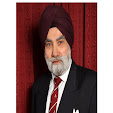
Gurmukh Singh
(Principal UK Civil Servant ret’d)
E-mail: sewauk2005@yahoo.co.uk

About the author, item on this blog at:
http://sewauk.blogspot.co.uk/2012/09/about-author-self-promotion-etc.html

© Copyright Gurmukh Singh (U.K.)
Please acknowledge quotations from this article. 
Articles may be published subject to prior approval by the author.


Monday, 17 August 2015

ANAND KARAJ: A SIKH RELIGIOUS CEREMONY


A personal view

This article informs the current debate about the Sikh religious marriage ceremony of Anand Karaj.

The Sikh Code of Conduct and Conventions, the Sikh Reht Maryada, allows  an Anand Karaj between a Sikh man and a Sikh woman.  

A Sikh, as defined by Sikh Reht Maryada,  “faithfully believes in One Immortal Being, Ten Gurus from Guru Nanak Dev to Guru Gobind Singh, Guru Granth Sahib, the utterances and teachings of the ten Gurus, baptism bequeathed by the tenth Guru and who does not owe allegiance to any other religion.”     

The above definition suggests a faith-centred approach to Sikhi, the Sikh way of life. It is focused on a belief system.  Sikh tradition from the times of the Guru-persons confirms, that it is a broad-based, river-bank type of approach, which guides all Sikhs in the same Panthic direction.

Unlike orthodox religions, the essence of Sikhi lies in acceptance of diversity under the large Panthic umbrella from the Times of Guru personalities.

Therefore, Anand Karaj is a SIKH as well as a FAITH ceremony.  It brings together a Sikh man and a Sikh woman before Sri Guru Granth Sahib to focus on one Guiding Light, the Guru-bani, as the 4 Lava(n) are recited, and repeated by Kirtan (singing).  Sikhi sikhia (advice) is given about the code of conduct to be followed during married life, and the couple make a solemn promise to live accordingly together as husband and wife, and raise a Sikh family.

It is a solemn Sikh religious ceremony so that the couple can select one path in life and tread along that path as two bodies guided by the same Guiding Light (as “Ek jyot doay moorti”).    

Guru Nanak Sahib’s founding ideology evolved through the Sikh institutions to the organisation of the Khalsa Panth as a distinct way of life. It has its own disciplines and rites (sanskaars):  mainly birth, marriage, and death, which distinguish the Sikh faith as an independent path. Massive sacrifices have been made to defend this egalitarian ideology against an oppressive state, mentored by orthodox religious fanaticism.

Arguments given in favour of Anand Karaj involving couples from Sikh and non-Sikh backgrounds, range from mildly amusing to the most absurd.

For some, the only way to save Sikhi is to start by compromising, and even dismantling, Sikh institutions! One of the most sacred of these institutions is the Anand Karaj sanskaar (religious rite), which puts a Sikh couple on track for responsible married life as householders, to bring up children as Sikhs.  

Some refuse to understand that there is no talk here about “Sikhs” of diverse racial or other backgrounds; or of those communities which always had faith in Guru Granth Sahib only.

Some argue in favour of  “mixed” (Sikh/non-Sikh) Anand Karaj on the basis of Bani (sacred hymns) of  Bhagats (saintly people) of different religious backgrounds being honoured in Sri Guru Granth Sahib.  

The founding ideology of Guru Granth Sahib starts with the Mool Mantar, which is the founding basis for Sikh miri-piri (temporal-spiritual)  institutions. 

The Mool Mantar is then repeated at the beginning of every Section of Guru Granth Sahib.  Such repetition of the Founding Formula of Sikhi has an ideological reason.  It is for the same reason, that even the selected  Bani of the Bhagats has been qualified by some small but significant additions to keep returning to the life-affirming, whole-life (miri-piri) theme of Sikhi based social activism and a path of truthful conduct. 

Many forget that not all Bani of the Bhagats was selected for inclusion in Guru Granth Sahib.  From recent views expressed on forums, it seems that even many well educated Sikhs do not understand the reason for this selective treatment of Bhagat Bani, which was to ensure consistency of the unique message of Sikhi. The Bhagat Bani was selected and qualified, where felt necessary by the Guru, to ensure consistency with the unique Sikhi themes. The inclusion of this Bani in Guru Granth Sahib has little to do with the religious background of the Bhagats.  

Interfaith Anand Karaj “ is a contradiction in itself, and cannot be related to the religious backgrounds of the Bhagats in Guru Granth Sahib.

Some argue that many Sikhs also have very little knowledge of Sikhi.  So, instead of arguing for better educational arrangements at Gurdwaras BEFORE Anand Karaj, they argue for Sikh/non-Sikh “Anand Karaj”!  All Sikh born children are on the same religious ladder, albeit, on higher or lower rungs. They should be educated about the meaning of Anand Karaj before marriage.  

The latest argument I heard supporting  “mixed” Anand Karaj was:  “Tusseen ki galla(n) karday ho; ki Panj Piarian di eko religious background si !!” (What are you talking about? Did the Panj Piaray have the same religious background ?) Such logic leaves one speechless.

There is an argument that by retaining the faith-based Anand Karaj (i.e. a Sikh marrying a Sikh), young Sikhs will be driven away from Sikhi and Gurdwaras.  Sikh history shows the opposite to be true.  

With the erosion of Sikhi institutions and Gurmat based sanskaars during the time of Maharaja Ranjit Singh, Sikh numbers were inflated by the perks of Khalsa Raj established by 18th Century Khalsa Singhs. The moment the Khalsa Raj was no more, there was a drastic reduction in Sikh numbers until the revival through Singh Sabha movement. Sikh numbers started increasing again - put it to the army, Sikh military tradition etc, but the core ideology revived by great Sikh scholars, was the main driving force.

At Gurmat camps we find that young people do think about such matters.  The impression is that it is the large scale erosion of Sikh way of life and values which in turn may be driving young Sikhs away from Sikhi, in addition to other influences of modern living.

We can have dialogue between religions to establish better understanding and to lower the fences; but I doubt if, unlike "mix" married couples, different religions would be willing to share the same ideological bed!  The Anand Karaj is a distinctly Sikh institution which has deep faith significance as taught during the ceremony.  Otherwise, Gurdwaras will always welcome  all, including “mix” married couples. 

My personal view is that only Sikh tradition can teach us how to survive as Sikhs.
Continual cross references to other religions may not be the best way forward. The present excessive negativity is not justified. Since my arrival in the UK 55 years ago we have always faced challenges and thrived !

Finally, this is a plea to young Gursikhs who feel that there should reforms in Gurdwara procedures.  I quote from an earlier article written in another context, “Even when protesting in a democracy, we need to abide by and influence others through Sikhi values. A few years ago, I had the privilege of covering a protest by young Sikhs at Trafalgar Square in response to a challenge by some religious zealots from another community threatening public conversions. The behaviour of the Sikhs was exemplary and highly praised by the police and the on-lookers. The protest was totally effective.”  (article on Sikhnet: “Sikh Tradition of Morchas & Martyrdoms”)

Breaking the law is an offence and, in addition to lowering community image, legal consequences have to be faced. To remain peaceful while articulating the mainstream Sikhi viewpoint is the way to win hearts and minds: to bring about any reforms considered necessary in consultation with local Sangats and responsible Gurdwara managements.  

Harsh language used by people in position responsibility or influence, including those in media positions, even if “metaphorical”  is also regrettable.  More so in view of the background of Sikh lives lost due to “mistaken identity”.  They expose the whole Sikh community to life-threatening danger by using such language. 

Meanwhile, Gurdwaras face a challenge, which is also an opportunity to review practical Sikhi education in Gurdwaras, including that relating to Anand Karaj.

Gurmukh Singh

© Copyright Gurmukh Singh (U.K.)

E-mail: sewauk2005@yahoo.co.uk
Please acknowledge quotations from this article. 
Articles may be published subject to prior approval by the author.


Sunday, 2 August 2015

The Compassion of Guru Nanak Sahib


“ Having conquered Khurasan, Babar, the Mughal, has terrified Hindostan (India). O my Lord, do You not feel responsible [because You are the Creator] when You send the invader Mughal as the Angel of Death?  When people are screaming in agony, do You not feel any compassion for their suffering O My Lord ?”
 (Guru Nanak Sahib  Sri Guru Granth Sahib (Raag Asa Ang 360)

Horrified by the terror unleashed by Babur, the Mughal invader who descended on India from the North-West with his hordes,  Guru Nanak Sahib turned to the Creator Lord  for divine intervention.  The questioning complaint and plea is that of an innocent child turning to own Father for help. 

How relevant is Guru Nanak Sahib’s plea invoking divine mercy today, as we watch the poignant scenes on our television screens of terror being inflicted on innocent people in the name of religion.  We have seen hundreds of thousands fleeing the terror unleashed by the forces of the Islamic State (IS) and other belligerents in the Middles East, all in the name of religion.  Videos released by boastful religious zealots  show throats of innocent captives being slit as “sacred” religious passages are recited!  Jihadi fighters carrying naked swords, herd women and children like slaves.  Hapless victims have been buried alive to save ammunition.  These are scenes reminiscent of the middle ages.  
We saw indiscriminate rockets rain down on the towns of Gaza killing hundreds of innocent civilians.  Young and old, little children and women, none were spared

In the 21st Century we watch helplessly as terror and oppression continue to be inflicted by misguided religion.  That is what Guru Nanak Sahib (1469 – 1539) saw in his times and founded his religion on compassion (daya).

He told the misguided cruel Muslim ruler to be a true follower of Islam, “A Muslim is he who is kind hearted” (SGGS Ang 1084)

He was touched by the social oppression justified by the degrading caste system sanctioned by the Manuwadic varan ashram.  He told the Hindu to wear the jeneu (sacred thread symbolic of caste) made from the cotton of compassion.  He told the high caste Brahmin, “Make compassion (daya) the cotton, contentment the thread, continence the knot and truth the twist”  of your sacred thread.  (SGGS Ang 471)

He told Hindu and the Islamic ruler of his day, “In the next world caste and power count for nothing”  (SGGS Ang 469

Guru Sahib’s compassion had no limits.  At a very young age, knowingly, he invoked his father’s wrath by spending all the money he was given to do business on food, to feed the hungry.

Thus, the Light (Jyote) of Guru Nanak passed through ten human forms to build a theo-social system,  and the egalitarian Sikh institutions of Sangat-Pangat (Congregation and indiscriminate community kitchen serving all),  and the Khalsa Panth were built on compassion. 

It is no co-incidence that the first of the Beloved Five, the Panj Pyaray, was named Daya Singh (the Compassionate Lion) the Khalsa.  Even the sword, the last-resort defender of the weak and the defenceless was named Kirpaan, the compassionate defender of human dignity and honour.  Even the Tenth Guru Nanak, Guru Gobind Singh’s use of arms for a just cause showed compassion in the field of battle by not only not striking a fallen foe but offering him water and medical care.  Even the Khalsa ultimate objective of  halemi raj (regime)  is built on compassion: a regime in which no one inflicts pain on another.  (SGGS Ang 74 )  

Today we live in a world which is continually being brought to the brink of disaster due to lack of compassion.  Religion is misinterpreted to spread terror and communal disharmony.  Following in the footsteps of Guru Nanak Sahib, we pray to the Timesless Lord, to save the burning world; to save all humankind no matter which religious path is followed.

In our Ardaas (supplication) we recite Guru Nanak Sahib’s concluding prayer:
“May all enjoy well-being through Your [Compassionate] Will.”


Gurmukh Singh


© Copyright Gurmukh Singh (U.K.)
E-mail: sewauk2005@yahoo.co.uk
Please acknowledge quotations from this article 
Articles may be published subject to prior approval by the author

Friday, 31 July 2015

Sikh View about Euthanasia (assisted dying or mercy killing) and Suicide.


“This body is the Lord’s Temple wherein is revealed the jewel of Divine comprehension”.  Guru Amardas, Sri Guru Granth Sahib (SGGS), Ang[1] 1346.

“Kabir, difficult to obtain is the human birth.” Bhagat Kabir SGGS A. 1365

“Kabir, world is passing away to meet ultimate death. However, no one knows how to die.  He who dies such a death (in Lord’s Will) dies not again.” Bhagat Kabir SGGS A. 555.

This article is in two parts:

1.      First part introduces some related concepts from Sikh ideology

2.      Second part sums up Sikh view in the context of the current debate about legalising mercy killing or assisted dying.

(Important note:  The concept of “God” in Sikhi (preferred to “Sikhism”) is as described in the Mool Mantar – Source Mystical Description - the first composition of Sri Guru Granth Sahib (SGGS), the Sikh Holy Scripture;  and none other, despite many traditional names for the Timeless, Creator Being used in SGGS. The Mool Mantar is repeated more than a hundred times in SGGS and is the basic teaching on which are founded Sikh ideology, institutions and the Sikh way of life referred to as Sikhi. )

Related concepts from Sikh ideology

[In this part, only some of the many references are quoted from SGGS  in the footnotes as examples. Opening words are given in Gurmukhi (roman letters) for quick reference.  Otherwise, numerous similar references can be quoted from Gurbani (Guru’s Word in SGGS) which confirm the same Sikhi concepts.]

The main challenge for a human being in life is from the wandering mind (mann). “A person acts according to the wishes of the mind. The mind feeds on virtues and vices. Intoxicated with the wine of Maya -worldly attractions, contentment never comes.” [2]

Mann, the wandering mind, due to all the trials and tribulations of life, is driven to distress and despair, which can lead to death wish.  It can only be controlled through study and knowledge. This is the thinking or discerning part of the mind referred to as matt.  Sikhs pray for the control of matt over mann[3].

In Sikhi, the mind is controlled and brought to a stable condition through Gur-matt (the Mind or Word of the Guru)[4] . In that state the mann is God-centred[5].   

The wandering mind is controlled through study and practise of  Gurbani (Guru’s Word).  The study of  the lives of the Guru-persons from 1469 to 1708, and the Khalsa history and tradition give numerous teaching examples of challenges in many life situations.  These were faced and, ultimately, overcome through the positive mental state of charrdi kalaa (a peculiarly Sikh concept of ascending energy.

For example, old people sometimes start thinking they are a burden on family and society. The Third Guru, Guru Amardas showed by own example how much can be achieved in advanced age. Based on Guru Nanak Sahib’s founding ideology, most of the Sikh institutions were set up by Guru Sahib.  

The starting point for every Sikh is to know the purpose of human life. The ultimate Sikh goal of human life (manas janam meaning human birth) is to seek union with the Timeless Lord (Akal Purakh) [6], remembered by many names in SGGS.

This is achieved when self or own will is surrendered to God’s Will (Bhana or Hukam Rzaee)[7].

Only God’s Will remains when the human soul is united with the Supreme Soul (Param-atma)[8].  That state of God union and God experience is achievable in this life.

Through such realisation and surrender of self to His Will, my experience of life also becomes His experience through me[9].  My pain or pleasure become His, in His Will.

My birth was in His Will . When the time comes, my death too will be by His Will[10].

Meanwhile, knowing that He is with me all the time in every situation, through pain and pleasure, suffering and in comfort [11], I remain in positive spirit through constant God-awareness.  That is the concept of “ascending energy”, or charrdi kalaa, in Sikhi  acquired through constant God awareness (Naam simran) while seeking the good of all [12].    

Human life is an opportunity to harmonise human experience with God experience and remove the apparent duality between the two; so that, ultimately, only God experience remains . So that only God, the Timeless Creator Being, is experiencing Own creation through the human body and mind experience.   Only His Name - His qualities described by numerous names -  remains and “my name” is no more[13].   

To stress: human experience becomes God’s Own experience through the human mind and body.  For the human being this is achievement of the state of sehaj avastha or Sehaj anand (state of equipoise, equanimity and ultimate bliss) in all situations and life experiences .  Being equanimous in pain and comfort, a Gurmukh (Guru-ward person)  remains positive (in charrdee kala) and detached from joy or sorrow [14].

Human experience is God experience and human suffering is part of that experience.  

Experience of  both, pain and comfort, or, suffering and happiness  (dukh and sukh) are seen as human experiences leading to the same of ultimate surrender of self to the Will of the Creator, Timeless Being (Karta, and Akal Purakh)

If comfort and pleasure leads the human mind away from the goal of human life, then pain can be the cure for that disease (rog)[15] .

The Sikh view is that after countless lower life forms (chavraasi lakh joon) which took the soul through the evolutionary process, human life (manas janam) was achieved[16] . Human life is at the top rung of the ladder of evolution[17,18).  

Human life is a rare opportunity to experience God awareness [19].  Human life,  at the top rung of the evolutionary ladder of life, offers the opportunity to evolve further and merge human experience with God experience, so that self-consciousness is no more and the human being attains and remains in a state of God experience, through pain and comfort.   

A Sikh attains and remains in a state of charrdi kalaa through constant God remembrance (Naam simran) while living a full life of a householder.  Pain and pleasure are not his or her’s;  but God’s in God’s Will (Bhana).

In Sikh tradition, Sikh martyrs willingly accepted physical pain inflicted by oppressive regimes while fearlessly resisting injustice and religious bigotry.  None is recorded in Sikh history as even contemplating taking own life. They always remained in charrdi kalaa (positive spirit).  

When the duality between self awareness and the God experience is removed then self is no more. There is only the One Creator Being, the Timeless Being, experiencing everything through each and every human experience. Any cause for despair and depression is removed by acceptance of  Bhana (His Will).

Sikh tradition started during the Guru period, cares for the needy and the sick and provides relief from pain with the use of medicine. There is some evidence that the Guru’s not only provided hospitals, but also searched far and wide and kept the most advanced medicines. Sikhi supports medical research. Helping those who are not well and providing relief from pain is part of Sikh tradition.

Current debate about legalising mercy killing or assisted dying.


I quote Lord Indarjit Singh with appreciation, “Sikhs accept that life is a gift of God to be cherished and preserved wherever possible, but we are also required to bear in mind the important Sikh teaching of compassion, dignity and care for the suffering. These two considerations are not necessarily incompatible.” (See below web link for his full speech in the House of Lords on 12 December 2014)


In addition to obvious physical reasons to do with the discomfort of ageing, physical disability, suffering from some incurable disease or terminal illness, prolonged pain etc, there are often mental and emotional  reasons why a person would wish to end own life. In old age, people sometimes feel that they are not wanted and are a burden on others.


Modern life is full of stress due to the rat-race to do well materially. The peer pressure and the competition to succeed is intense. We have a crowded world and rapid advances in science, technology and information technology. Sometimes, the human mind is unable to cope with all that is going on around us.  That leads to mental disorder, depression and suicidal tendencies.


The quality of social life is poor and becoming worse each day. In industrialized wealthy countries, human beings are more like moving parts in large machines. They are not motivated from within to pursue creative activities while remaining close to nature and God, but by the requirements of the suffocating modern business-centred workplace environment.


It may even be argued that the root cause of some world conflicts identified with religious ideologies, is, in fact, an expression of  dissatisfaction with modern living.  It is a form of mental illness which expresses itself in suicidal terrorism.


As discussed in the first part, Sikh ideology gives very clear pointers to what can be done to educate and motivate aimless lives to understand and serve the purpose of human birth (manas janam). There are advances in medical science which offer pain relief and cure.


Old age is not a burden on anyone.  No matter what the physical condition; old age can be a blessing for the family and the Society.  By their very presence, elderly parents keep families together and are able to contribute to society through knowledge and experience of a life time. Advances in physical care lessen the burden of physical management of elderly people.


There are too many flaws and even risks in the argument that an individual has the  “right to die” promoted by some politicians and organizations like “EXIT”.


God gave us human life and only God has the “right” to take it away. No one esle has the “right” to take it away.


Providing medicinal or surgical relief from pain, psychological treatment, and not prolonging life artificially can be distinguished from the act of ending life –assisted or by self. Otherwise, God’s Will (Bhana) and human surrender to that Will; and acceptance of pain and pleasure as part of life in His Will, is the Sikh way (Sikhi).


The societal dangers of legalizing assisted dying are only too obvious. These have been well expressed by Lord Indarjit Singh and others.


In conclusion, Sikhs would support the line taken by Lord Indarjit Singh which he summarized as follows, “In summary, while we should always be on our guard against the notion of individual autonomy trivialising life, we need to recognise that, from an individual’s perspective, life can become pretty intolerable and there is an argument for helping to end it in strictly controlled circumstances. The danger is that, if we go down this path, it could itself be a slippery slope to trivialising life, altering the very ethos on which medical care is provided.”


Not assisted dying, but Guru-guided living, is the Sikh way.


Gurmukh Singh


© Copyright Gurmukh Singh (U.K.)

E-mail: sewauk2005@yahoo.co.uk
Please acknowledge quotations from this article. 
Articles may be published subject to prior approval by the author

Related links:

Lord Indarjit Singh’s full speech can be read at NSO link:

http://davidalton.net/2014/07/19/strong-parliamentary-opposition-to-euthanasia-and-assisted-suicide/


[1] Ang is the preferred word for “page” of Sri Gursu Granth Sahib, the Word Guru, regarded as the Living Guru of the Sikhs.
[2] Mann kaa kahiaa mansaa karaae  SGGS A 832  

[3] Sikha(n) da mann neeva(n), matt uchi (Sikh Ardaas or supplication)
[4] Gur ki matt 288
[5] Mann too Jyot Saroop. SGGS A. 441
[6] Beyee prapat manukh SGGS A. 12
[7] Hukam razaee SGGS A. 1
[8] Jab Tum hotay  SGGS A. 657
[9] Sehs Tav nain SGGS A. 662
[10] Hukmay aavay  SGGS A.  151, 688, 940 1025 1037
[11] Gur meray sang SGGS A. 394
[12] Nanak Naam charrdi kalaaa -  concluding words of Ardaas (Sikh supplication).
[13] Kaho Nanak sabh Teree  SGGS A. 83
[14] Harakh sog.. SGGS A. 685, 1427; Dukh sukh gurmukh A. 907

[15] Dukh daaroo….469
[16] Keyee janam bhaiy keet. SGGS A. 176
[17] Sagal jon meh SGGS A. 913
[18] Avar jon teri panhaari A.374
[19] Eho manas janam SGGS A.450 

Sunday, 14 June 2015

Why No UK Sikh MPs: An Alternative View


Recent articles have given some good reasons for the absence of Sikh Members of Parliament in the UK.  However, it is clear that some, especially Indian journalists, tend to read too much negativity into this outcome; while others do not understand the British system for selecting Parliamentary candidates by the main political parties.

In the UK,  politics does not pay.  Most well qualified next generation Sikhs, otherwise doing well in many professions, have shown hardly any interest in political careers. That can change over the next few years.

Members of Parliament are there to raise issues on behalf of all their constituents.  Some non-Sikh MPs have become Sikh household names.  An outstanding example was the late Sydney Bidwell, MP (Southall) of "The Turban Victory" fame. Piara Singh Khabra, the first Sikh MP, who replaced him, was not known for raising any Sikh, or even other important issues, in the Parliament. Raising Sikh issues is more important than a Sikh MP in Parliament who is unable to articulate them in the right context of national issues.     

It is true that identity Sikh MPs of the right calibre would also raise the Sikh profile in the Parliament and the British establishment, including the mainstream media.  Therefore, we also need Sikh MPs, preferably full identity Sikhs.  Lack of Sikh unity has been given as the main reason for this.  That is rather a simplistic view expressed mostly by those who believe in some sort of block voting system along Indian political lines; or, who do not understand the British political system.  

Firstly, we can discard block-voting by British Sikhs. Other communities would adopt such tactics; but it is highly unlikely that the independent minded Sikhs would adopt such tactics – except for certain Punjabi localities like Southall. Every Sikh, as a British citizen, should vote according to own assessment of each candidate’s suitability, taking into account national needs and the extent to which the manifesto of the main party to which the candidate belongs, meets them. A candidate’s knowledge of Sikh aspirations and needs would be a plus point for Sikh voters.

The need is for MPs, Sikh or non-Sikh, who would also raise Sikh issues and concerns. The Sikh Manifesto prioritises these under ten main headings. The list is not exhaustive; but is a good a start.  It was sent to Parliamentary candidates before the election and will continue to be updated and re-presented to MPs in the years to come and their performance continually assessed.

A Sikh candidate of the right calibre, winning a seat in Parliament will make the Sikhs proud, not only by winning; but also each time he stands up to speak! Not just Sikh men, we should also encourage well qualified Sikh women to stand for elections.  At the end of the day the important thing is to be able to raise the Sikh profile through outstanding performance and to pave the way for more Sikhs of the right calibre and political ambition to enter the Parliament.

A Sikh MP who is unable to articulate national and local issues, can also give a negative impression of the Sikhs.

Joining a political party and working for a number of years at local level while overcoming any prejudices through community service, is a pre-condition for getting selected as a candidate and succeeding at the ballot box.  While racial prejudice is decreasing, "ethnic" prejudice against the Sikhs is also decreasing, but at a much slower pace.  ("Ethnicity" characteristics which distinguish a people are defined by the Law Lords.)   

My observation over the last 50 years in diverse fields is that when an identity Sikh of the right calibre has been there at the right time and place, he has succeeded. There are complex reasons for the selection or non-selection of identity Sikhs.  Sporadic success of identity Sikhs in some fields does not mean less prejudice against visible Sikh identity.  There have been opportunity areas for the right calibre Sikhs in certain fields e.g. gaining recognition through interfaith involvement.

However, the exception cannot be taken as the rule. Sikh success in certain fields does not mean that ground level prejudice is no longer there. Taking the example of USA, a black President does not mean that there is now no prejudice against black Americans. 

Also, Sikh focus since early arrivals has been material gain and not political careers. In UK, politics does not pay.  The first generation Sikh immigrants from late 1950s were not interested in politics, but in making money by working 7 days a week doing as much overtimes as possible. No job was too difficult for them. First priority was to buy own house and then, in later years, to buy properties and businesses.

On the other hand, black socio-political activism goes back many decades.  Muslims are known for religio-political activism. Hindu first generation were better educated and could not work in foundries and factories.  Many went into local politics for “expenses” and other perks. In my own circle some even returned to India unable to work in factories like the hardy Panjabi Sikhs. Today, on the average, both communities are  less well off than the British Sikhs.  Very few Sikhs depend on state welfare system.

So, next generation well qualified Sikhs, have hardly any political heritage or track record of dedicated local political activism with any main political party. Exceptionally, where there is such a record, either the candidate is not of the right calibre to get the Parliamentary ticket, or not given a winnable seat. The Sikh Manifesto addresses this bias in the selection procedure as a high priority.

Positive developments are:  increasing Sikh numbers, well established Gurdwaras as Sikh focal points and increased extrovert as well as behind the scenes Sikh activism.  Sikh presence is felt in the corridors of power and in the Parliament where Sikh issues are raised quite regularly. More so with Sikh political awareness spreading through the widely circulated Sikh Manifesto.  

Internal Sikh divisions have less political impact than some lead us to believe.  Other communities have own problems. This excuse is used mostly for internal Sikh politics and point scoring. That is not to say that Sikhs would not be better off if they showed more unity and common political direction.  However, unlike, especially the Muslim community, block voting is not the Sikh way.

The stress should be to encourage young well educated Sikhs to join political parties. Next step, as mentioned in the Sikh Manifesto, is to lobby political parties to allocate winnable seats to well qualified Sikh candidate with a good record of local community service. Identity Sikhs living in areas with hardly any Sikh population have succeeded in local elections. However, national level politics is a different ball game.  The stakes are higher and so are the suitability and qualification requirements.

Otherwise, we should be content that Sikh issues are being taken up by MPs who are well briefed about Sikh aspirations and concerns.  That continues to be the main aim of the Sikh Manifesto UK.

Gurmukh Singh
Principal (policy), UK Civil Service ret’d
Sewauk2005@yahoo.co.uk
Blog: http://sewauk.blogspot.com.au/

Sikh Manifesto link:
https://www.dropbox.com/s/4tpu52zulblmulp/The%20Sikh%20Manifesto%202015-20%20by%20The%20Sikh%20Network.pdf?dl=0

© Gurmukh Singh